Four classes, two weapons each, and a trait tree per weapon
The class decides your identity; the weapon decides how you actually fight. That second half is the part the
studio has explained in detail, and it is the reason two players holding the same sword can end up playing
completely different games.
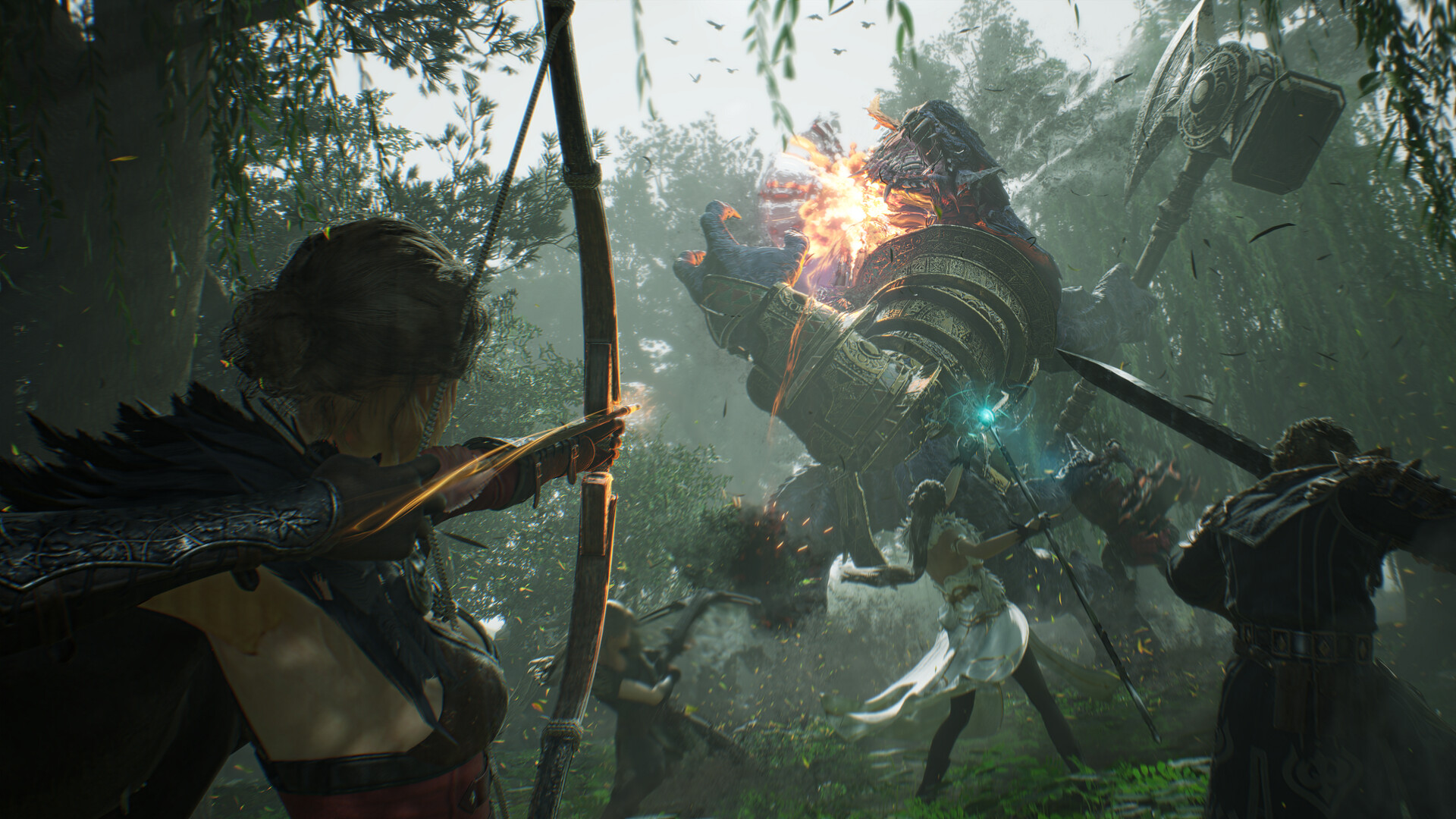
Plate 08 / Ranger engaging at range
What a weapon tree changes
Every weapon type has its own trait tree, and you spend trait points inside the Traits menu to work through it.
For a Fighter, the longsword tree and the greatsword tree are separate things with separate paths, so
specialising in one does not advance the other.
Most nodes are small stat boosts that carry you along a branch. Others hand the weapon brand new skills. A third
kind changes how an existing skill resolves, which is the detail that matters most: the same button can behave
differently depending on what you picked, so a build is not just a pile of percentages.
Because the paths branch, the studio's own example is two greatsword players who fight nothing alike. One takes
the damage branch, unlocking Armor Break and converting sunder into Sweeping Slash,
which strikes twice instead of once and covers a wider cleave arc. The other takes the defensive branch and picks
up Pummel Strike, an attack usable while guarding that grants a damage-absorbing shield. Same
weapon, opposite instincts, and the studio says both builds are viable.
Trait point costs, tree depth and respec rules are unpublished. The studio has said costs, tree layouts and which
skills get alternate versions will likely change during Early Access, so treat any numeric build guide as provisional
until launch.
Folio 01.2 / Class dossiers
What is on record for each class
Two of the four classes have their weapons published. For Berserker and Mage the record is genuinely blank, and
this page marks that rather than inventing a loadout.
01
TWO WEAPONS
Warrior
Longsword / Greatsword
The class the studio uses to explain weapon trees. A longsword Warrior and a greatsword Warrior do not share a trait tree, and two greatsword players can still end up on opposite branches.
Longsword and greatsword each have a separate trait tree.
The greatsword damage branch unlocks Armor Break and turns sunder into Sweeping Slash, hitting twice instead of once with a wider cleave.
The greatsword defensive branch adds Pummel Strike, usable while guarding, which grants a shield that absorbs damage.
Exact skill coefficients, cooldowns and parry windows are not published.
02
TWO WEAPONS
Ranger
Bow / Hatchet
The ranged class shown in the PvP footage, where the Ranger with hatchets was played by the executive producer.
All four classes are playable in the demo with two of their weapons.
Parrying ranged attacks and reflecting them back is called out by the creative director as one of the most fun parts of the duels.
The hatchet tree contents, range falloff and projectile speeds are unpublished.
03
WEAPONS UNKNOWN
Berserker
Not yet named
Confirmed as one of the four demo classes. The studio has not yet published its weapon pair or trait tree.
Listed with Warrior, Ranger and Mage as playable in the Next Fest demo.
Both weapons and the whole trait tree are unpublished. This page names no numbers.
04
WEAPONS UNKNOWN
Mage
Not yet named
Confirmed as one of the four demo classes. Intelligence is the magic attack attribute, but the studio has not detailed the Mage trees.
Listed as playable in the demo.
Talent is described as supporting magic attack, which is the only magic-side stat rule published so far.
Weapon pair, tree layout and skill list are unpublished.
Folio 01.3 / Attributes
The six stats every level feeds
Strength
Raises physical attack.
Agility
Raises critical hit chance and adds to physical attack.
Constitution
Raises HP and resistance to critical hits.
Intelligence
Raises magic attack.
Talent
Supports magic attack and lets you equip better gear without the penalty.
Endurance
Raises stamina and defense.
One point always buys one stat regardless of how high that stat already is, and the character sheet previews the
change before you commit. No breakpoint maths required, which is a deliberate design choice rather than an oversight.